
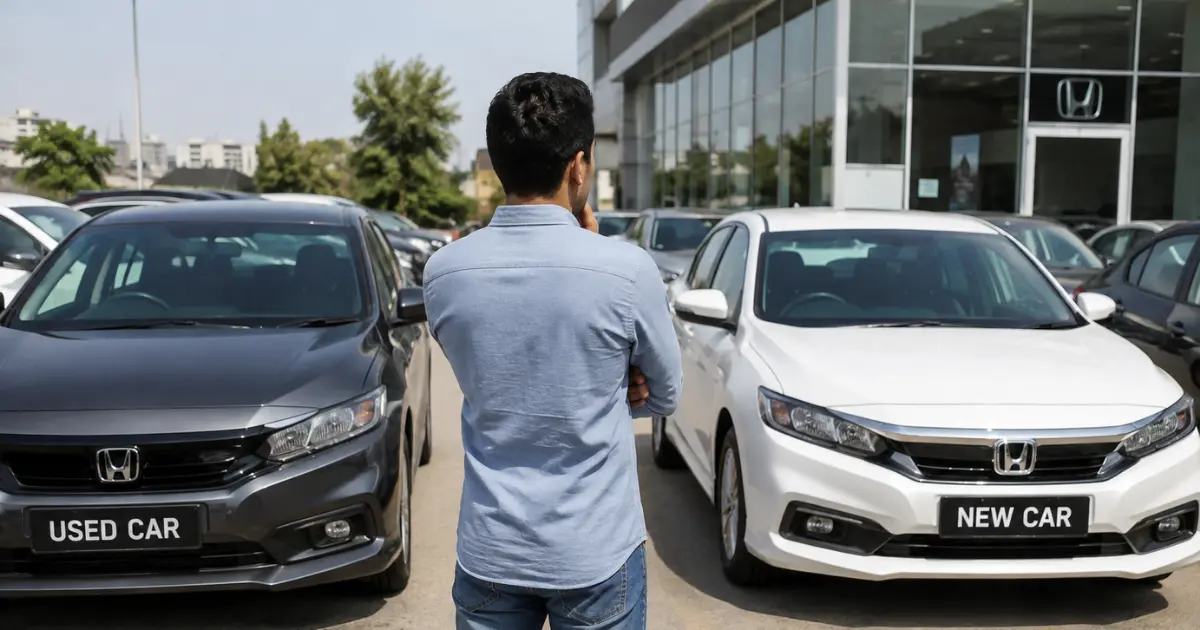
Buying a car is exciting—but it can also become one of the biggest financial mistakes you ever make if you decide emotionally instead of logically.
There is no universal answer to the question, “Should I buy a new car or a used one?” The right choice depends on your financial situation, your driving needs, your long-term goals, and how much you’re willing to spend over the coming years.
Many people assume that buying a new car is always the better option because it offers greater reliability and the latest features. Others believe that buying a used car is the only financially smart choice. In reality, the best decision lies somewhere in between.
If you’re planning to buy a car but aren’t sure whether “a new car or a used car” is the right choice, this guide will help you compare the two, understand the hidden costs of ownership, and make a smart decision you’ll be happy with for years to come.
Before comparing specific cars, it helps to step back and look at the bigger decision. Our guide on how to think clearly before any big purchase decision explains a simple framework you can use before committing a large amount of money.
Why This Decision Matters
A car is not just a purchase—it’s a long-term financial commitment.
Beyond the purchase price, you’ll pay for:
- Insurance
- Fuel
- Maintenance
- Registration
- Repairs
- Loan interest (if financed)
- Depreciation
Choosing the wrong car can delay other important financial goals like buying a home, building investments, or creating an emergency fund.
That’s why the smartest question isn’t:
“Which car is better?”
It’s:
“Which car makes more sense for my financial situation?”
The Biggest Difference: Depreciation
The single biggest advantage of buying a used car is avoiding heavy depreciation.
A new car starts losing value the moment you drive it out of the showroom.
In many cases:
- A new car loses 15–25% of its value in the first year.
- After 3–5 years, it may lose nearly half its original value.
- Yet it often performs almost as well as when it was new.
When you buy a quality used car, someone else has already absorbed most of that depreciation.
That’s one reason many financially disciplined people prefer buying used vehicles.
When Buying a New Car Makes Sense
A new car isn’t automatically a bad financial decision.
In fact, it can be the smarter option if several of these conditions apply.
1. You Plan to Keep It for Many Years
If you intend to drive the same vehicle for 10–15 years, depreciation becomes less important.
The longer you own the car, the more value you get from every rupee spent.
2. You Want Maximum Reliability
A new car comes with:
- Manufacturer warranty
- No previous owner’s driving history
- Latest safety features
- Better fuel efficiency
- Lower repair costs during the early years
If reliability is critical—for example, you travel long distances every day—a new car can provide peace of mind.
3. You Can Comfortably Afford It
Buying new only makes sense if:
- Your emergency fund is secure.
- You’re regularly investing for the future.
- Your monthly payments fit comfortably within your budget.
- The purchase doesn’t force you into unnecessary debt.
Buying a car should never leave you financially stressed.
There is another opportunity cost to consider: the money going into a car could otherwise be used for investing. If you’re weighing the two choices, see our guide on whether you should buy a car or invest the money.
When Buying a Used Car Is the Smarter Choice
For many buyers, a used car offers the best balance between value and affordability.
1. Your Budget Is Limited
A used car lets you buy a better model for the same amount of money.
For example:
Instead of buying a basic new hatchback, you may afford a well-maintained sedan that’s only three years old.
2. You Want to Avoid Large Loans
Car loans increase the total cost through interest.
If you’re considering financing the purchase, don’t look at the EMI alone. The bigger question is whether taking on the loan is actually a good financial decision.
Buying a reliable used car with little or no loan reduces financial pressure. Lower EMIs also leave more money available for investing.
3. You Don’t Care About Owning the Latest Model
Many cars remain excellent even after five years. If your priority is transportation rather than showing off a brand-new vehicle, buying used can save lakhs of rupees.
The Hidden Costs People Ignore
Many buyers compare only the purchase price. That’s a mistake. Consider these additional expenses:
- Insurance: New cars generally cost more to insure.
- Depreciation: The newer the car, the faster the value falls during the first few years.
- Maintenance: Older cars may require more repairs. However, choosing a well-maintained used vehicle with a service history can reduce this risk.
- Fuel Efficiency: Newer models often have better mileage and updated engines.
- Loan Interest: Long loan tenures can make an expensive car significantly more costly than its sticker price.
Questions to Ask Before Buying
Instead of asking, “Can I afford the monthly EMI?”, ask yourself these smarter questions:
- Can I comfortably afford the total cost of ownership?
- Will this purchase delay my financial goals? A large purchase should be judged by its effect on your entire financial life—not just whether you can manage the immediate payment. The same way of thinking applies when deciding whether you can really afford a home or another major financial commitment.
- Do I really need a new car?
- Could a three-year-old car meet my needs?
- Am I buying because I need it or because I want to impress others?
Sometimes these questions save more money than months of bargaining.
The 3-Filter Rule Before Buying Any Car
At MoneyDecider, we recommend using a simple 3-Filter Rule before making any major purchase.
- Filter 1: Need — Do you genuinely need a car now? Or can your current vehicle continue serving you for another couple of years?
- Filter 2: Affordability — Can you comfortably pay for the purchase price, insurance, fuel, maintenance, registration, and unexpected repairs without hurting your savings or investments?
- Filter 3: Long-Term Impact — Ask yourself:
Will this decision improve my financial life five years from now? Or will it become a burden?
If the answer isn’t clear, waiting may be the smartest decision.
New Car vs. Used Car: Key Differences at a Glance
| Factor | New Car | Used Car |
| Purchase Price | Higher | Lower |
| Depreciation | High (15–25% in Year 1) | Lower (Major loss already absorbed) |
| Warranty | Standard Manufacturer Warranty | Limited or none |
| Maintenance | Lower initially | May be higher |
| Insurance | Higher | Lower |
| Latest Features | Yes | May lack newer features |
| Loan Requirement | Often larger | Often smaller |
| Overall Value | Depends on long-term ownership | Excellent if carefully chosen |
Mistakes to Avoid
Many buyers regret their purchase because they:
- Buy more car than they actually need.
- Stretch their budget for luxury features.
- Ignore depreciation.
- Skip a professional inspection for used cars.
- Focus only on EMI instead of total ownership cost.
- Buy emotionally after a short test drive.
Avoid these mistakes, and you’ll likely make a much better decision.
So, Should You Buy a New Car or a Used One?
A new car is often the better choice if you value reliability, plan to keep it for many years, and can comfortably afford it without compromising your financial goals.
A used car is usually the smarter financial decision if you want maximum value, lower depreciation, reduced borrowing, and more flexibility in your budget.
The smartest buyers don’t ask,
“Which car is better?”
They ask,
“Which choice helps me build a stronger financial future?”
When you make that your guiding question, you’ll rarely regret your decision.
Final Thoughts
A car should improve your life—not limit your financial freedom.
Take your time, compare all the costs, inspect any used vehicle carefully, and avoid making the decision based on emotion alone.
Whether you choose a new or used car, the best purchase is one that fits your needs, protects your finances, and leaves room for your future goals.
Because smart money decisions aren’t about buying the most expensive option—they’re about buying the right one.
Frequently Asked Questions (FAQs)
Is buying a used car better than buying a new car?
It depends. A used car often offers better value because someone else has already absorbed most of the depreciation. A new car, however, provides a warranty, the latest safety features, and greater reliability.
How old should a used car be?
For many buyers, a car that is 3 to 5 years old with a complete service history strikes a good balance between price, reliability, and remaining lifespan.
Is it worth taking a loan for a new car?
It can be, but only if the monthly payments comfortably fit your budget and don’t prevent you from saving or investing for other important goals.
What should I check before buying a used car?
Inspect the vehicle’s service records, accident history, ownership details, tire condition, engine performance, and have it examined by a trusted mechanic before making a purchase.
Which is cheaper to maintain: a new or used car?
New cars usually have lower maintenance costs in the first few years due to warranties. Older used cars may require more repairs, although a well-maintained used vehicle can still be economical.
Ask Your Money Question
Share your financial dilemma. Your question may become a helpful guide for others too.
About the Author
Naivedyanandan Sonowal is a former teacher and APDCL professional who now works as a freelance journalist. He writes about real-life money decisions shaped by experience. Having managed loans, debt, and financial responsibilities firsthand, he shares practical insights to help readers think clearly before they spend, borrow, or invest. He is also the author of a book on smart retirement planning, available on Amazon.
👉 Read my story →